Sponsored article
Why Did Bolesławiec Become a Centre of Pottery?
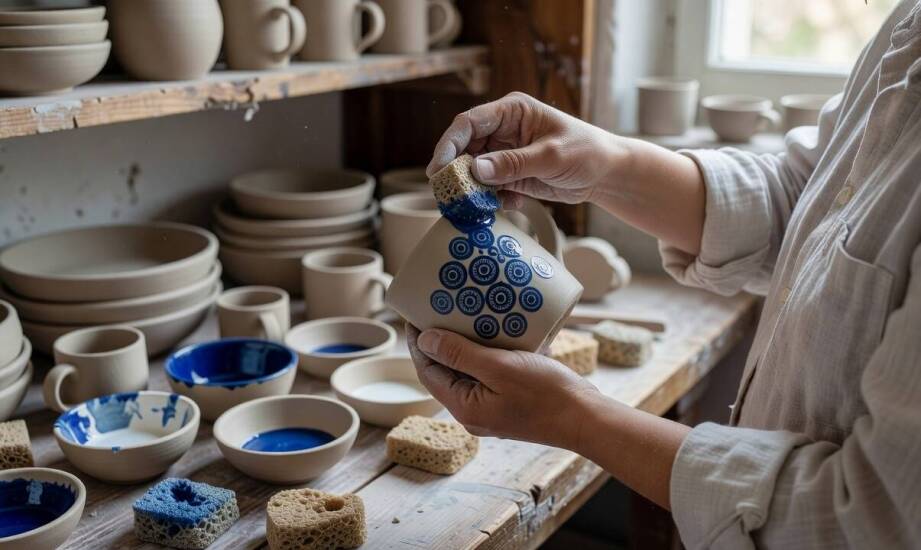
Bolesławiec has been associated with pottery and stoneware for centuries. The development of the local craft was supported by access to suitable clay deposits, generations of skilled potters and the town’s position within an important Central European trading region.
Read more: Poland Pottery – A Treasure of National Tradition and Craftsmanship
Over time, local materials, technological innovation and the exchange of ideas with neighbouring areas helped create a distinctive ceramic tradition. Today, Bolesławiec is internationally associated with durable Polish stoneware and characteristic hand-applied decoration.
Why Did Pottery Develop in Bolesławiec?
One of the most important reasons was the availability of suitable raw materials. Clay deposits in the region around the Bóbr and Kwisa rivers provided local potters with material well suited to the production of durable ceramic vessels.
This allowed pottery workshops to develop without relying entirely on raw materials transported over long distances.
The tradition dates back to the medieval period. Early workshops mainly produced practical objects for everyday use, including pots, jugs, bowls and stove tiles.
Functionality was initially more important than elaborate decoration. Vessels needed to withstand regular household use, which made the quality of the clay, shaping and firing process particularly important.
As the craft developed, workshops began to produce a wider variety of forms and decorative styles. Potters experimented with glazes, relief decoration and motifs inspired by plants, animals and heraldry.
Trade Routes and Cultural Exchange
Bolesławiec, historically also known as Bunzlau, developed within a region connected to important Central European trade routes.
Its location supported contact between craftsmen, merchants and artistic traditions from different parts of Silesia and neighbouring regions.
The exchange of technical knowledge contributed to the gradual development of shaping, firing and decorating methods.
By the 17th and 18th centuries, local stoneware had become known for characteristic forms, brown glazes and applied relief decorations. Floral, animal, biblical and heraldic motifs appeared on jugs and other vessels.
This was not yet the blue-and-white stamped pottery most people associate with Bolesławiec today. It was, however, an important stage in the development of the region’s distinctive ceramic identity.
From Craft Workshops to Modern Ceramic Production
The 19th century brought significant technological changes to Bolesławiec pottery.
One of the most important figures of this period was Johann Gottlieb Altmann, a local master potter who experimented with ceramic bodies and improved the technology used in local workshops.
His work gained recognition outside the region. In 1844, Altmann received an honorary award at a major craft exhibition in Berlin. In 1851, his ceramics were awarded a gold medal at the Great Exhibition in London.
These successes demonstrated that stoneware produced in Bolesławiec could compete with ceramics from other important European manufacturing centres.
Another major step came in 1897 with the opening of the Vocational School of Ceramics in Bunzlau.
The school combined technical education with artistic development and introduced new approaches to ceramic design and production. It supported experimentation with materials, glazes and manufacturing techniques and became closely connected with local pottery workshops.
How Is Bolesławiec Pottery Made Today?
Modern production uses contemporary equipment, but many stages still reflect traditional craftsmanship.
The production of Boleslawiec Poland pottery can be simplified into several key stages:
forming the piece on a potter’s wheel or in a mould;
drying the shaped clay;
the first firing at approximately 900°C;
hand-decoration using stamps and brushes;
glazing;
a second firing at approximately 1250°C.
The combination of stoneware clay, hand-applied decoration and high-temperature firing gives the finished ceramics their characteristic appearance and practical properties.
The stamped decoration that is now strongly associated with Bolesławiec developed in the late 19th century.
Dots, circles, floral elements and the well-known peacock-eye motif could be repeated across the surface to create rhythmic patterns. Over time, stamping became one of the most recognisable features of the regional style.
Why Is Bolesławiec Stoneware So Durable?
The firing process is an important part of the material’s performance.
During high-temperature firing, the stoneware becomes dense and develops low water absorption. The glaze creates a smooth finished surface and protects the hand-applied decoration during everyday use.
Modern Bolesławiec ceramics are therefore designed not only to be decorative but also functional.
Many contemporary pieces can be used in a microwave and cleaned in a dishwasher, making traditional-looking stoneware suitable for modern kitchens and dining rooms.
This balance between craftsmanship and practicality is one reason why Bolesławiec pottery continues to appeal to customers outside Poland.
Hand Decoration as Part of the Tradition
Technology gives the vessel its structure, but hand decoration gives it much of its individual character.
Bolesławiec pottery is particularly well known for the stamping technique. Repeated motifs create a distinctive visual rhythm while still allowing small differences between individual pieces.
Traditional designs often feature cobalt blue, dots, flowers, leaves and peacock-eye motifs, although contemporary collections also use a much broader range of colours and patterns.
Because the decorations are applied by hand, two pieces made in the same pattern do not have to be perfectly identical.
These small differences are not necessarily defects. They are a natural result of manual decoration and distinguish handcrafted stoneware from completely automated mass production.
Bolesławiec Tradition in Contemporary Manufactories
The historic pottery tradition continues in modern workshops and manufactories operating in Bolesławiec today.
Manufaktura in Bolesławiec produces hand-decorated tableware and decorative ceramics inspired by the region’s traditional techniques.
Its collections include mugs, cups, plates, bowls, jugs, serving dishes and decorative pieces. Traditional stamped patterns are combined with forms intended for regular everyday use.
This approach allows Bolesławiec pottery to remain connected to its historical roots while adapting to contemporary homes and dining habits.
Why Does Bolesławiec Pottery Still Matter Today?
The history of ceramics in Bolesławiec shows how local raw materials, technical development and generations of craftsmanship can create a distinctive regional tradition.
The town’s pottery evolved from practical medieval and early modern vessels into internationally recognised stoneware with a strong decorative identity.
At the same time, the history of Bolesławiec is part of a broader Central European craft tradition. The town was historically known as Bunzlau, and its ceramic industry developed through changing political borders and cultural influences before becoming one of the best-known centres of pottery in modern Poland.
Contemporary Bolesławiec pottery is therefore more than a reproduction of an old craft.
It is a living tradition that continues to combine stoneware, hand decoration and practical design.
That combination allows the ceramics to remain relevant in modern kitchens and dining rooms while preserving a connection with centuries of regional craftsmanship.
You might be interested

The importance of flexible mushroom suppliers for success in the food sector
How to Read Images of Saints on a Chasuble: Attributes, Scenes and Patronal Meaning

How to Design a Sequence of Cleaning Zones at an Entrance with a Primary Brush Barrier?
